
Connect for Research Collaboration and PhD Opportunities
Use this page to contact PRACSYS about algorithmic robotics research questions, doctoral candidacy, and structured collaboration under NSF/NASA-style grant work.
We read every message, but we respond fastest when the first email already contains the technical context we would otherwise have to ask for.
Direct Research Inquiries
If you have a question about a method, a result, or a reproducibility detail, email the lab director: [email protected].
The most useful messages look like short field notes: what you tried, what failed, and what you think the failure means. A screenshot of a planner trace or a one-paragraph description of the state/control spaces beats a long narrative.
What to include in the first email
- Your affiliation and role (e.g., MSc student, postdoc, industry researcher)
- The problem setting (robot model, environment assumptions, constraints)
- What you want from us: a pointer, a sanity check, or a potential collaboration
- Any hard constraints on timing (submission deadlines, proposal windows)
If your question depends on unpublished data or proprietary systems, say so up front; it changes what we can discuss over email.
For Prospective PhD Candidates
We are interested in applicants who can reason about algorithms and also implement them without hand-waving. That usually shows up as a small number of projects done carefully, not a long list of half-finished repos.
When you write, treat it like a technical pre-brief. Tell us what you built, what you measured, and what you would change if you had another month.
PhD inquiry checklist
- CV (PDF) and a short note on your research interests (5–10 sentences)
- One representative artifact: paper, thesis chapter, or a code sample you are proud of
- Evidence of technical depth (math, systems, or experimental rigor—pick one and show it)
- Your expected start term and any funding constraints you already know about
We can usually tell fit from the first exchange. If there is alignment, we will suggest a next step that matches the stage you are at (reading list, a scoped problem, or a formal application path).
Institutional & Grant Partnerships
We collaborate when the technical work is well-scoped and the expectations are explicit. For grant-driven projects, we prefer to agree early on what counts as a deliverable: a dataset, a baseline implementation, a validated planner, or a set of experiments that can be audited.
Our lab has participated in multi-year, grant-funded research efforts in the NSF/NASA ecosystem; the practical constraint is that timelines and reporting requirements can shape what we can take on in a given semester.
Partnership note
When you propose a collaboration, include the anticipated funding mechanism (if any), the expected period of performance, and whether student support is part of the plan. That single paragraph prevents weeks of back-and-forth.
Some collaboration models work well on paper but break down in robotics because hardware access and safety reviews are real bottlenecks.
Meet the Research Team
For a sense of who is working on what right now, visit the team page at /research-team/. If you are trying to reach a specific researcher, mention their name in the email subject line so it routes quickly.
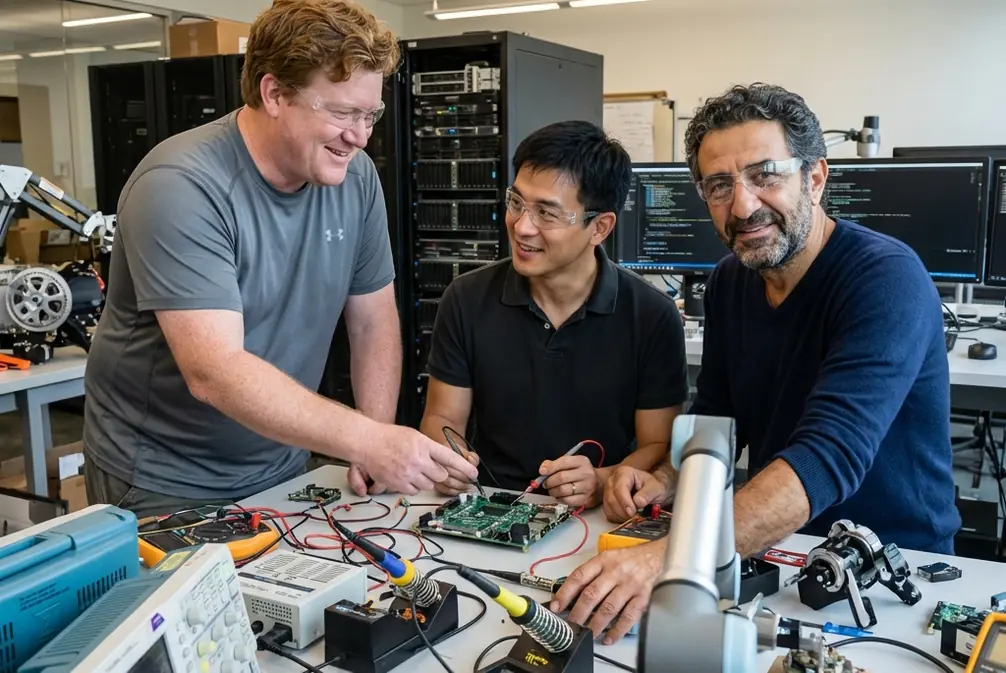
Lab visits are possible, but we schedule them with a clear purpose: a technical discussion, a demo review, or a planning session tied to a proposal. Email first; we do not support drop-ins.
Send your message to the lab director with the technical context in the first email.
Email Athanasios Krontiris