
Computational Biomedicine
Try specific terms like 'kinematics', 'motion planning', or 'topology'.
In-depth coverage and expert perspectives
Page 1 of 1
Applying advanced motion planning and control theories to steerable needles, surgical assistance, and autonomous medical systems.
Leveraging strategic partnerships with the Center for Computational Biomedicine Imaging and Modeling (CBIM) for high-fidelity data analysis.
Simulating complex physiological interactions and soft-tissue dynamics to improve diagnostic accuracy and preoperative treatment planning.
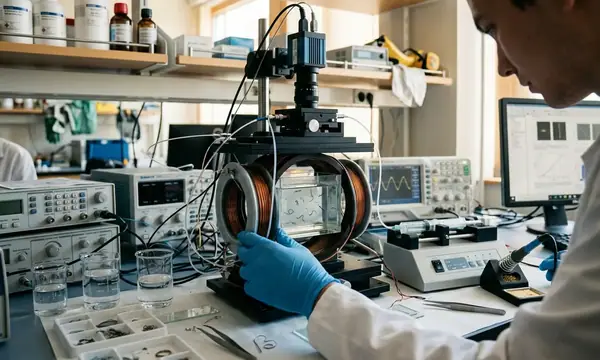
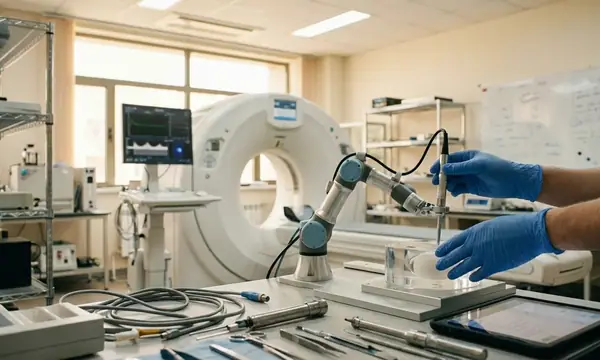
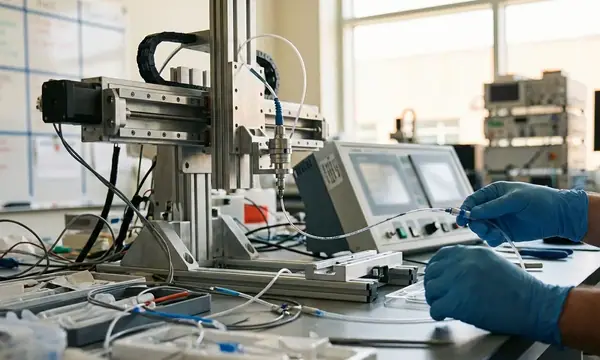
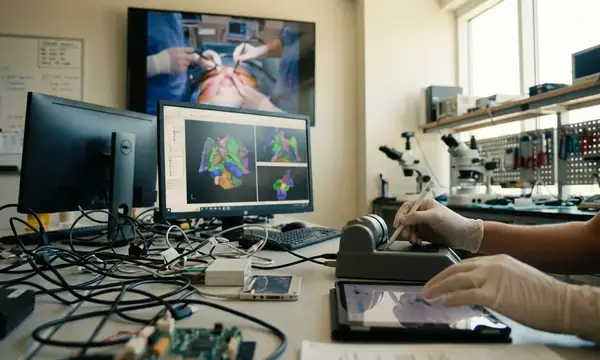
Computational biomedicine gets practical when robotics and imaging stop being separate workstreams. The hard part is not picking a “best” segmentation model or a “best” controller; it is making uncertainty, deformation, and workflow constraints explicit so the full loop—image formation to action—can be tested and traced.
In our experience, the most durable results come from pipelines that treat validation as a first-class design input: registration stress tests under motion, tissue-interaction checks in simulation, and closed-loop trials that reflect how clinicians actually use the system. That said, intraoperative anatomy can change faster than any preoperative prior, so even strong models need failure modes that are easy to detect and safe to recover from.