
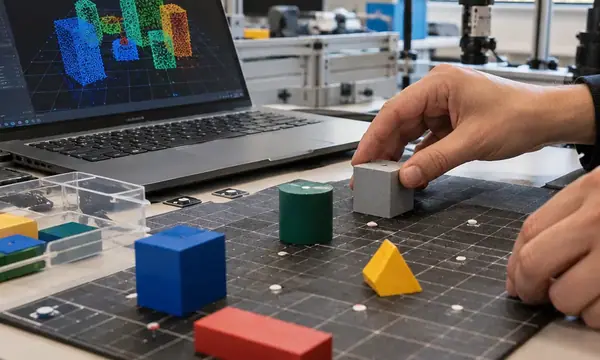
Algorithmic Robotics
Try specific terms like 'kinematics', 'motion planning', or 'topology'.
In-depth coverage and expert perspectives
Page 1 of 1
Rigorous mathematical frameworks underpinning motion planning, algorithmic control, and computational geometry.
Unifying sensing and actuation through asymptotically optimal algorithms designed for dynamic, unstructured environments.
Bridging the gap between simulation and reality with robust, physically consistent models for autonomous manipulation.

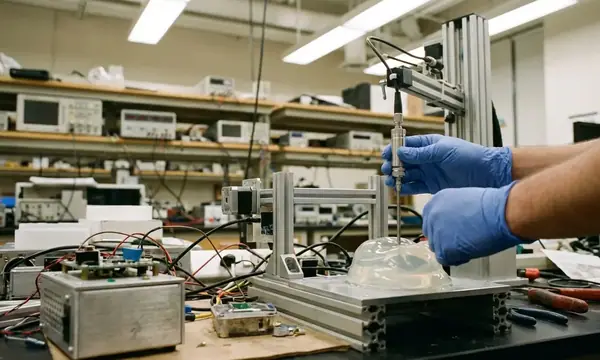
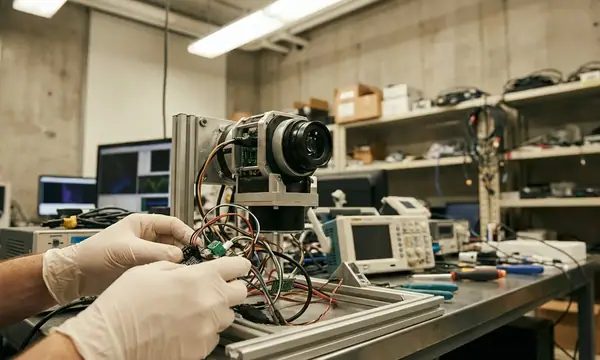
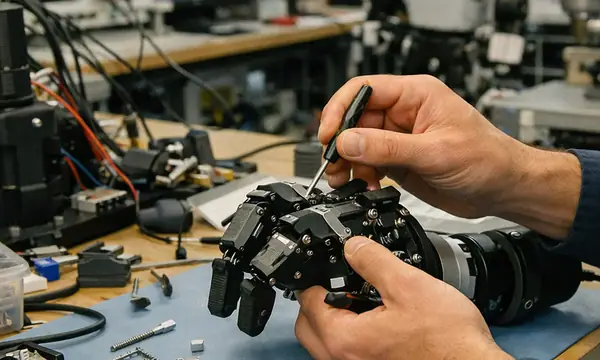
Physics-aware autonomy lives or dies on whether your algorithms respect the same constraints your hardware cannot escape: actuation limits, contact discontinuities, latency, and partial observability. When those constraints are treated as first-class objects in planning, estimation, and control, the resulting stack becomes easier to debug because failures map back to violated assumptions rather than “mysterious” behavior.
In practice, the most useful work in this area reads like careful bookkeeping: explicit models where they help, uncertainty where it matters, and validation that matches the deployment surface. Some edge cases remain stubbornly system-specific—especially contact-rich tasks where friction and compliance dominate—so the cleanest theory still needs disciplined experimental framing to stay honest.